Skylab B

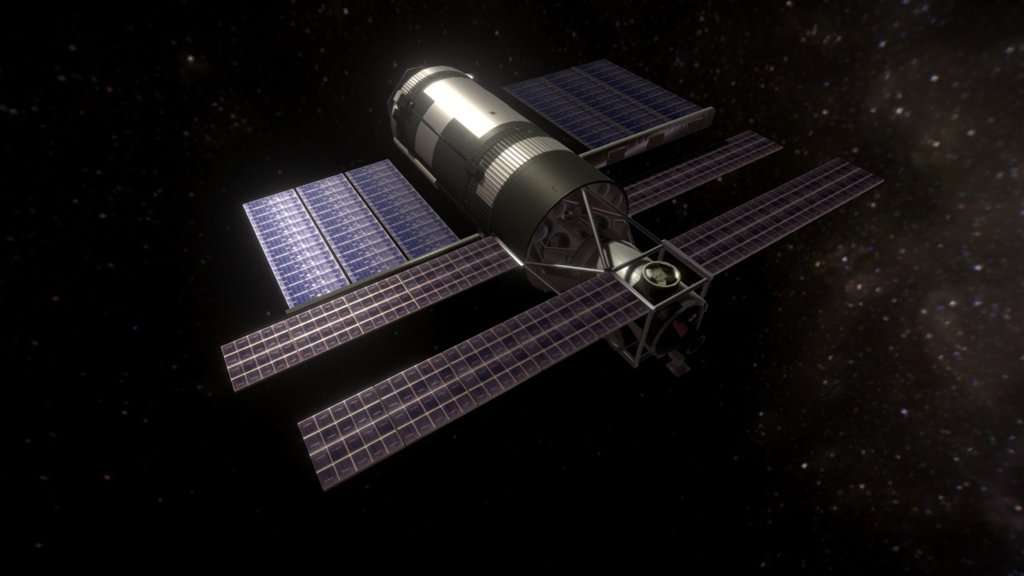
Skylab Space Station 3d Model - Skylab B space station 3D model, depicting NASA's ambitious unbuilt orbital laboratory proposal.

Skylab Space Station 3d Model

This meticulously crafted Skylab B 3D model brings to life NASA’s ambitious, yet ultimately unbuilt, second orbital laboratory proposal, offering a rare glimpse into a pivotal “what if” moment in space history. While the original Skylab successfully orbited Earth from 1973 to 1979, Skylab B represented an evolutionary step, designed to expand upon its predecessor’s capabilities and further solidify America’s presence in low Earth orbit. This digital recreation captures the spirit of that visionary project, reflecting the detailed engineering and scientific aspirations that characterized the Apollo Applications Program.

Engineers envisioned Skylab B as a powerful platform for advanced astrophysical observations, materials processing in microgravity, and extended human physiological studies. The design incorporated lessons learned from Skylab A, proposing enhancements to power generation, crew habitability, and experimental payload capacity. Exploring this model reveals the intricate planning behind such a complex structure, from its solar array configurations to its internal module layouts, all conceived to push the boundaries of space exploration.

Skylab Space Station 3d Model – Unveiling NASA’s Unbuilt Vision

The concept of Skylab B emerged from the robust success and scientific output of Skylab A, prompting NASA planners to consider a follow-up mission. This proposed second station aimed to leverage existing Apollo hardware, much like its predecessor, but with modifications to improve efficiency and extend operational life. Our 3D model accurately reflects the conceptual designs and technical drawings that defined this ambitious next-generation space laboratory, showcasing the ingenuity of the era’s aerospace engineers.

It stands as a testament to the continuous drive for scientific advancement and orbital presence that characterized the post-Apollo era. This digital artifact allows enthusiasts, educators, and professionals to study the proposed architecture and understand the technological considerations that went into designing such a monumental facility for long-duration missions.

Skylab Space Station 3d Model – Architectural Brilliance in Orbit

The Skylab B design showcased a modular approach, integrating several key components into a coherent orbital platform. At its core, the workshop module provided extensive living and and working space for the crew, a hallmark of its design. Surrounding this central hub, various other sections facilitated everything from solar observations to Earth resources studies. This thoughtful integration of diverse elements made Skylab B a truly self-sufficient and highly capable orbital scientific outpost.

Attention to detail in this model highlights the ingenious solutions developed for power generation, thermal control, and communication systems. Every component, from the articulated solar arrays to the docking adapter for crew transfer, is rendered with precision, offering an immersive look into the engineering challenges and triumphs of the time. The robust structure was designed to withstand the harsh environment of space, providing a stable platform for critical research.

Key Features of the Proposed Station

This remarkable Skylab B space station 3d model meticulously renders the distinctive elements that would have defined this advanced orbital laboratory. Examine the precise geometry and component integration that characterize NASA’s forward-thinking design. The model provides an unparalleled opportunity to visualize this ambitious project as it was envisioned by its original creators.

  • Detailed structural framework, accurately depicting the primary modules and interconnections.
  • Realistic representation of the Apollo Telescope Mount (ATM) with its distinct solar arrays for astrophysical research.
  • Precise modeling of the multiple solar panels, crucial for generating electrical power for sustained operations.
  • Intricate textures capturing the metallic sheen and thermal blanketing of the spacecraft’s exterior.

A Legacy of Innovation and Exploration

Though Skylab B never left the drawing board, its conceptualization profoundly influenced subsequent space station designs, including elements of the International Space Station. It represents a crucial chapter in the history of human spaceflight, illustrating NASA’s continuous pursuit of extended human presence beyond Earth. This model serves as a valuable educational tool, inspiring future generations of engineers and scientists to dream big and explore the unknown.

Discover more about the fascinating history of Skylab and its proposed successors by visiting the NASA Skylab Guidebook. For other high-detail models, consider checking out our Ferarri GTB 488 2015.

Seller Original Description

Skylab B space station, based on a NASA proposal.

4.8
★★★★
Based on 4 verified buyer reviews
Eric Nelson✓ Verified Buyer
★★★★☆
The PBR textures are absolutely stunning and very realistic.
Peter Hughes✓ Verified Buyer
★★★★☆
Really impressive model design with clean UV mapping.
Samuel Wright✓ Verified Buyer
★★★★★
Zero issues with the FBX export it worked immediately.
Kevin Lewis✓ Verified Buyer
★★★★★
The pivot points are placed exactly where they should be.
🛡️

Extended Use License

This item comes with our Extended Use Licensing. This means that you may use the model for both non-commercial and commercial purposes, in a variety of mediums and applications.
🛡️ 14-Day Money-Back Guarantee
Instant 3D Model Files Download
🔒 100% Secure Payment

has been added to your cart!

have been added to your cart!

You must log in and be a buyer of this download to submit a review.

ABOUT THE SELLER skylab b 3d model
SELLER-USER-NAME Ricardo Nunes
3D Model formats FBX, OBJ, BLENDER, TEXTURES, Materials
3D Model details VR / AR / Low-poly, Textures, Materials, UV Mapping, Scale transformations
Triangles 35.1k
Vertices 23k
Category ,
Tags , , , , , , , , , , , , , , , ,

Leave a Reply

Your email address will not be published. Required fields are marked *