Dornier 217 Aircraft 3d Model
Dornier 217 Aircraft 3d Model – Engineering the Nocturnal Predator
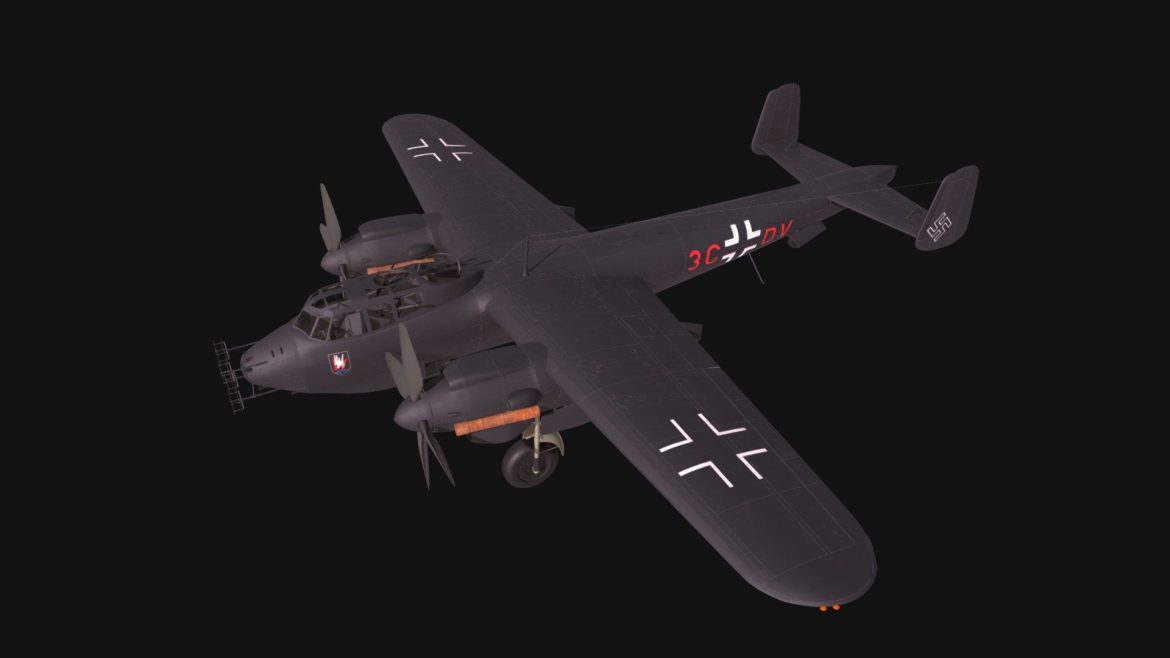
The FuG 202 Lichtenstein radar arrays protruding from the nose of this Dornier Do-217 N1 signify its transformation from a medium bomber into a lethal nocturnal predator. This digital recreation captures the imposing silhouette of the Flying Pencil’s successor, emphasizing the structural modifications required to carry heavy armament and sensitive electronics. Every panel line and rivet placement reflects the transition from offensive bombing to defensive intercept missions during the height of the air war over Europe.
Artists and historians alike appreciate the precision found in the engine nacelles housing the massive Daimler-Benz DB-603 A powerplants. These liquid-cooled inverted V12 engines provided the necessary thrust to intercept Allied bombers under the cover of darkness. The geometry mirrors the aerodynamic refinements that allowed this heavy aircraft to maintain agility despite its increased combat weight and drag-inducing radar equipment.
Dornier 217 Aircraft 3d Model – Lethal Armament and Specialized Avionics
A formidable array of forward-firing weaponry defines the N1 variant, removing the traditional glass nose in favor of a solid fairing. This model accurately depicts the grouping of four 20mm MG 151/20 cannons and four 7.92mm MG 17 machine guns, creating a concentrated wall of lead for night engagements. The digital craftsmanship ensures that each barrel aperture and shell ejection port sits correctly within the fuselage structure.
The inclusion of the FuG 202 Lichtenstein B/C radar system adds a layer of technical complexity to the forward profile. These antennas required careful calibration in real life, and here they serve as a striking visual focal point for close-up renders. The dornier 217 aircraft 3d model maintains fidelity to these delicate components, ensuring they look structurally sound and historically accurate from any viewing angle.
Digital Detailing and Material Fidelity
This asset utilizes high-resolution textures to convey the wear and tear typical of frontline night fighters operating from grass airfields. The matte black or dark grey camouflage schemes common to the era respond realistically to varied lighting conditions, showcasing the subtle specular highlights on the metallic surfaces. The landing gear assemblies feature complex hydraulic lines and sturdy struts, capable of supporting the aircraft’s weight during high-stress landings.
- Accurate FuG 202 radar antenna geometry provides realistic thickness and mounting points.
- Detailed DB-603 A engine exhausts showcase heat staining and carbon buildup textures.
- Fully modeled cockpit greenhouse includes internal framing and high-transparency glazing.
- Precisely scaled control surfaces offer functional flaps, ailerons, and twin-tail stabilizers.
The meticulous attention to the underside of the fuselage reveals the bomb bay doors, which remained part of the airframe even as the internal space housed additional fuel tanks or ammunition reserves. For other high-detail models, consider checking out our Commander. These components provide depth to the model, allowing for dynamic low-pass render compositions.
Historical Context for Virtual Environments
Integrating this aircraft into a historical simulation or a cinematic sequence requires a model that respects the weight of history. The Do-217 N1 served as a bridge between the early converted bombers and the later purpose-built night fighters like the Heinkel He 219. Its presence in a scene immediately establishes a specific timeline within the mid-war period, offering creators a versatile tool for storytelling.
The twin-tail design offers a unique silhouette that distinguishes this aircraft from its contemporaries in the night sky. Professional 3D artists will find the mesh topology clean and optimized for modern rendering engines, whether using PBR workflows or traditional ray-tracing methods. You can find more technical specifications on the airframe’s development at Air Vectors. This asset provides the fidelity needed for high-resolution stills and immersive background environments.
Seller Original Description
Development of the famous bomber into a night-fighter, with FuG 202 radar, four 20mm guns and four 7.9mm MG17 machine guns. Also featuring 2 DB-603 A engines.
Extended Use License
has been added to your cart!
have been added to your cart!
You must log in and be a buyer of this download to submit a review.
| ABOUT THE SELLER |
 |
| SELLER-USER-NAME | micapaconi |
| 3D Model formats | FBX, OBJ, BLENDER, TEXTURES, Materials |
| 3D Model details | VR / AR / Low-poly, Textures, Materials, UV Mapping, Scale transformations |
| Triangles | 654.6k |
| Vertices | 365.4k |
| Category | Cars & Vehicles, Weapons & Military |
| Tags | 3d aircraft, aircraft, airplane, DB-603 engine, do217n, dornier, dornier 217 aircraft 3d model, Dornier Do-217, FuG 202 radar, German bomber, luftwaffe, Military Aviation, night-fighter, ww2, wwii-aircraft |