Sokol Space Suit 3d Model
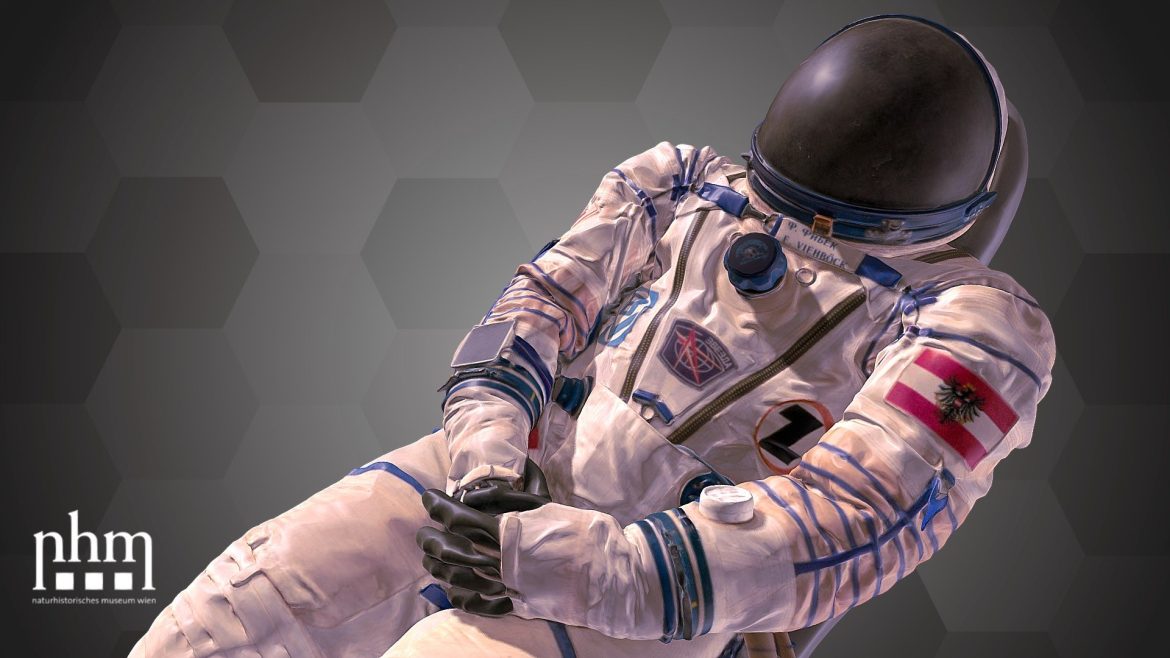
Franz Viehböck’s Sokol space suit represents a tangible link to the groundbreaking Austromir mission of 1991. On October 2nd, 1991, the Sojus-TM-13-rocket launched from Baikonur, carrying Viehböck, Commander Alexander Volkov, and Toktar Aubakirov into orbit. This mission marked a significant moment, not only for Austria but for international space cooperation, allowing the world to witness an Austrian pioneer’s journey to the MIR space station.
Sokol Space Suit 3d Model – A Legacy Preserved in Pixels
Franz Viehböck stands as Austria’s first and, to date, only astronaut, a testament to his remarkable achievement in electronics engineering and space exploration. His journey from the Vienna University of Technology to the vast expanse of Earth’s orbit inspires countless individuals. This digital rendition ensures that his personal connection to spaceflight remains vibrant and accessible for future generations, serving as a powerful educational tool.
The Sokol space suit itself is a marvel of Soviet engineering, designed to protect cosmonauts during the critical launch and re-entry phases of space missions. Its distinctive orange hue and robust construction are instantly recognizable, symbolizing resilience and advanced protective technology. Capturing such an artifact with high fidelity allows designers, researchers, and enthusiasts to delve into its intricate details, understanding the form and function of this essential spaceflight gear.
Sokol Space Suit 3d Model – The Suit of an Austrian Pioneer
The creation of this high-fidelity digital asset involved a dedicated team from the Natural History Museum Vienna (NHMW), utilizing an Artec Leo scanner. Their meticulous work ensures that every fold, seam, and texture of the original suit is accurately represented, offering a true-to-life digital twin. This detailed approach provides an invaluable resource for academic research, museum exhibits, and creative projects, enabling deeper engagement with the historical object.
Such an authentic digital representation allows for diverse applications, from virtual reality experiences that transport users aboard the Soyuz spacecraft to detailed simulations for educational purposes. The precision of the scan provides an unparalleled foundation for any project requiring historical accuracy and visual integrity. The `sokol space suit 3d model` is a testament to the power of digital preservation.
Unveiling Digital Authenticity
This 3D model offers an incredible level of detail, providing a comprehensive visual and technical understanding of the Sokol space suit.
- Precise surface geometry captures every fold, seam, and contour of the original garment.
- High-resolution PBR textures accurately reflect the material nuances, from fabric to metallic components.
- Authentic coloration meticulously replicates the original suit’s iconic orange and white appearance.
- Clean mesh topology ensures versatile usage across various 3D software and rendering pipelines.
Beyond Earth’s Atmosphere
Whether you are developing an educational application, creating a historically accurate visualization, or incorporating iconic space artifacts into a game or film, this 3D model delivers unparalleled realism. It serves as a powerful reminder of human ingenuity and the enduring quest to explore the cosmos, embodying the spirit of discovery that defined the Austromir mission.
Explore the intricate details of a suit that has truly been beyond Earth’s atmosphere. This digital artifact not only preserves history but also empowers creators and educators to share the wonder of spaceflight in new and engaging ways. For more information about the Natural History Museum Vienna’s contributions to science and culture, visit their official website. For other high-detail models, consider checking out our Low Poly 3D Winter Postcard.
Seller Original Description
3D scan of Franz Viehböck’s Sokol space suit that he wore on his flight to the space station MIR. Franz Viehböck studied electronics engineering at the Vienna University of Technology, and became the first and as of today only Austrian Astronaut. On the 2nd of October, 1991, the Sojus-TM-13-rocket started in Baikonur (KAZ). The commander of the Austromir mission was the Russian Alexander Volkov and the third man was the Kazakh Toktar Aubakirov.The space suit is no longer exhibited at the Natural History Museum Vienna, but was on display from 2015–2021. It will be put on display at the Technical Museum Vienna. We want to thank Franz Viehböck for the opportunity to scan and present this piece of Austrian history!Find out more about the NHMW here.Find out more about Franz Viehböck’s life here.Scanned and edited by G. Herbst-Kiss, G. Stöckle, C. Goldmann, J. Muhsil & A. Haider (NHMW)Scanner: Artec Leo. Infrastructure funded by the FFG.
Extended Use License
has been added to your cart!
have been added to your cart!
You must log in and be a buyer of this download to submit a review.
| ABOUT THE SELLER |
 |
| SELLER-USER-NAME | Natural History Museum Vienna |
| 3D Model formats | FBX, OBJ, BLENDER, TEXTURES, Materials |
| 3D Model details | VR / AR / Low-poly, Textures, Materials, UV Mapping, Scale transformations |
| Triangles | 200k |
| Vertices | 100k |
| Category | Cultural Heritage & History, Science & Technology |
| Tags | 3d-scan, 3dscan, 3dscanning, artec, artecleo, astronaut, austrianhistory, austromir, firstaustrianastronaut, franz viehbock, franzviehbock, franzviehboeck, historical artifact, history, mir, mir mission, museum, naturhistorisches, nhmvienna, nhmw, sokol, sokol space suit, sokol space suit 3d model, sokolspacesuit, space, Space exploration, space suit, spacesuit, wien |