Marbore Jet 3d Model
Marbore Jet 3d Model – The Legacy of French Jet Propulsion
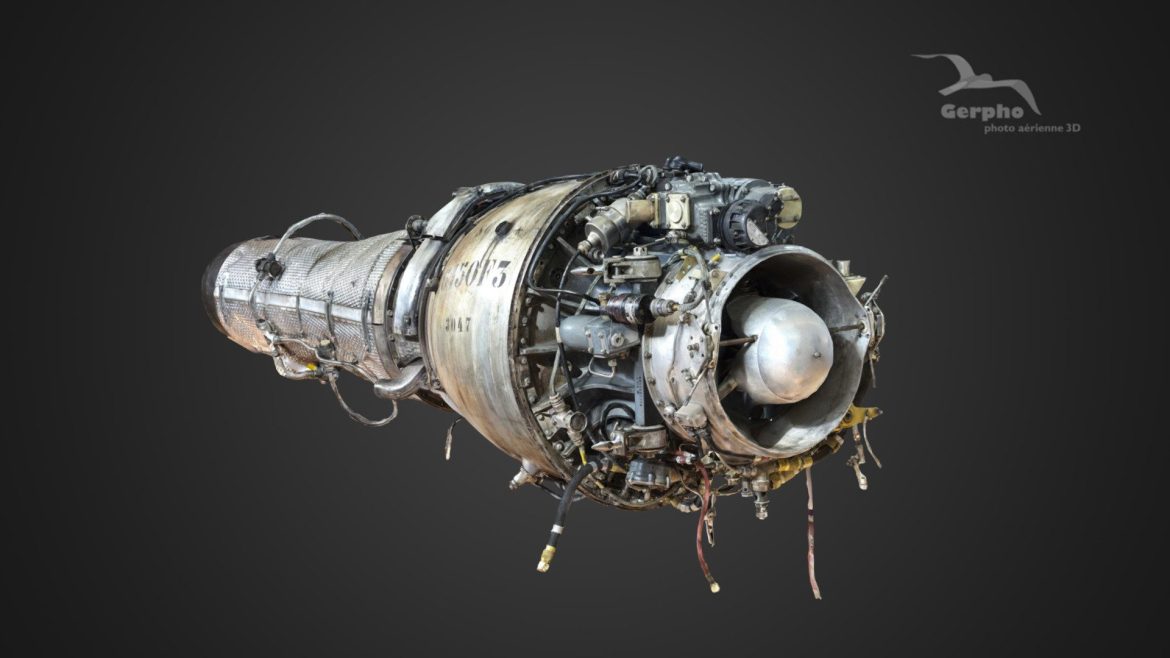
The Turbomeca Marbore represents a transformative leap in 1951 aeronautics, serving as the primary propulsion system for the legendary Fouga Magister jet trainer. This specific engine marked the moment when French engineering stepped boldly into the jet age, leaving behind the limitations of propeller-driven flight. Historians and enthusiasts recognize the Marbore for its unique centrifugal compressor, a design choice that ensured reliability during the early, volatile years of turbine development.
Aviation museums often feature this engine as a centerpiece because it symbolizes the rapid technological acceleration following the mid-century period. The sheer mechanical density of the unit provides a fascinating study in industrial design. Every pipe, bolt, and casing reflects a period where engineers prioritized raw functionality and durability above all else. This digital preservation ensures that the legacy of the Fouga Magister remains accessible to modern creators.
Marbore Jet 3d Model – Mastering Industrial Surface Realism
This marbore jet 3d model delivers incredible visual fidelity by capturing the specific wear and tear of a vintage industrial machine. Photogrammetry techniques allow for the extraction of high-detail surface data that traditional manual modeling rarely achieves. The collaboration with experts like James ensured that the textures accurately reflect the varied metallic finishes found on the original hardware. You can see the subtle differences between the heat-treated exhaust components and the cast aluminum housing.
Light reacts naturally to the scuffs, scratches, and oxidation present on the surface of the mesh. These imperfections tell a story of operation, maintenance, and the passage of time within a hangar environment. The scan preserves the intricate geometry of the fuel injection system and the complex wiring harness, providing a level of detail that satisfies even the most discerning technical artists. The resulting asset functions perfectly in high-end renders where authenticity is the primary goal.
Visual Fidelity and Technical Specifications
The technical structure of this asset prioritizes accuracy while maintaining a manageable footprint for modern software. The scan showcases the evolution of turbine technology through its distinct silhouette and internal component arrangement. Each element of the mesh corresponds to a real-world part, making it an invaluable resource for educational visualizations or historical reconstructions. The following features define the technical quality of this specific digital replica:
- High-resolution texture maps that emphasize realistic metal oxidation and grime accumulation.
- Precise geometric proportions derived from a physical 1951 Turbomeca Marbore unit.
- Authentic material separation between the combustion chamber and the external auxiliary components.
- Optimized surface normals that ensure smooth light transitions across curved industrial surfaces.
Digital artists benefit from the high-density information contained within the photogrammetric data. This allows for extreme close-up shots without losing the sense of scale or material integrity. The mesh provides a solid foundation for lighting studies, where the complex shadows cast by the external plumbing create a sense of depth and realism.
Implementing Historical Assets in Digital Scenes
Creators often pair this industrial relic with other vintage technology to build immersive environments or museum-style displays. Integrating such a specific piece of history adds a layer of credibility to any aeronautical scene. The engine works exceptionally well as a standalone study or as part of a larger maintenance bay visualization. For those seeking additional hardware inspiration from different eras, exploring a [Low poly Retro computer #2](https://deep3dsea.com/downloads/low-poly-retro-computer-2/) provides an excellent contrast in design philosophy.
The Marbore remains a cornerstone of European aerospace development. Its influence stretched far beyond the French borders, powering various international aircraft designs throughout the mid-20th century. Researching the full scope of [aerospace history](https://en.wikipedia.org/wiki/Turbomeca_Marbor%C3%A9) reveals how this small but mighty engine paved the way for the sophisticated turbines we see in modern aviation today. Utilizing this asset allows you to capture that specific spirit of innovation in your own digital workspace.
Seller Original Description
1951 : Young company Turbomeca develops a new type of engine : a jet engine, Marbore, for the famous “Fouga Magister”.Their first step in the era of jet aviation. (thanks to James for discussions on textures).Check for aerial 3D photos here
Extended Use License
has been added to your cart!
have been added to your cart!
Your Recently Viewed Downloads
 Flamingos
 You must log in and be a buyer of this download to submit a review.
| ABOUT THE SELLER |
 |
| SELLER-USER-NAME | Gerpho 3D |
| 3D Model formats | FBX, OBJ, BLENDER, TEXTURES, Materials |
| 3D Model details | VR / AR / Low-poly, Textures, Materials, UV Mapping, Scale transformations |
| Triangles | 248.8k |
| Vertices | 124.2k |
| Category | Cars & Vehicles, Science & Technology |
| Tags | 3d-model, 3dst35, acute3d, aircraft, aviation history, engine, fouga magister, gerpho, jet, jet-engine, marbore, Military, photogrammetry, plane, turbomeca |